An FAQ should answer questions customers actually ask. If every answer is a variation of “contact us to learn more”, the section is decoration.
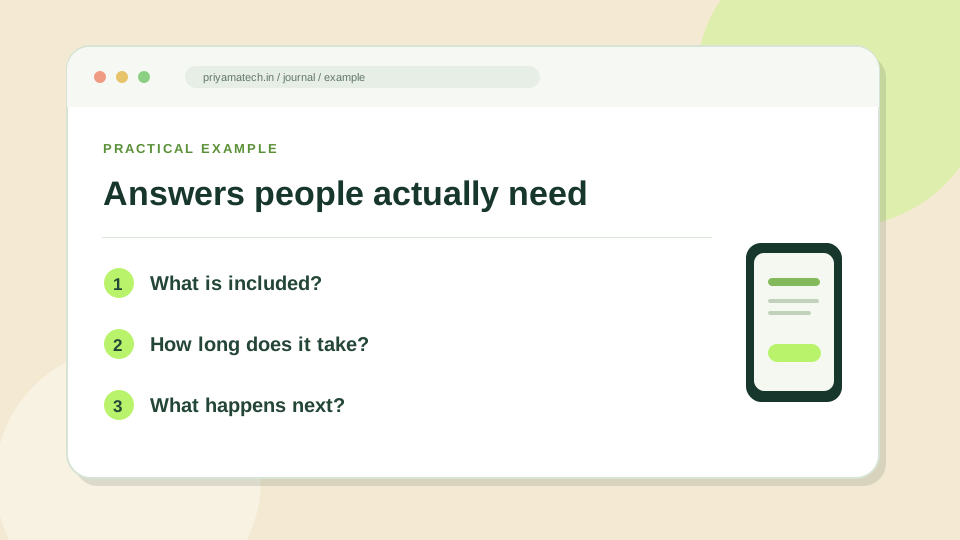
Start with your inbox
Look at recent enquiries. Which questions repeat? Price, timelines, what is included, how revisions work and what happens after launch are common examples. Write the answer as you would explain it to a thoughtful customer on a call.
For a service page, place the most important answer near the relevant section rather than hiding everything at the bottom. A short FAQ can handle the remaining details. Use clear headings so someone can scan quickly on a phone.
Be precise about uncertainty
If a timeline depends on content being ready, say so. If prices are starting points, state what changes the quote. Honest qualifications are more useful than a promise you cannot keep.
FAQs can also help search systems understand a page, but there is no need to chase a special markup trick. Google’s AI search guidance keeps the focus on useful, reliable information and the same search fundamentals that already apply to your site.
Keep them alive
Review the questions when your offer changes. An outdated answer about payment, service area or support can create more work than having no answer at all.
A real question deserves a clear answer
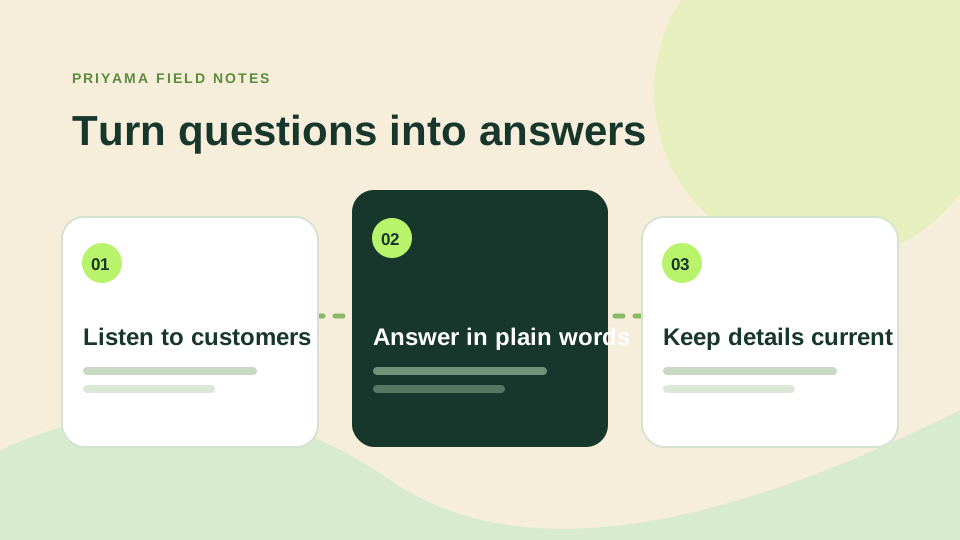
Open your inbox, sales chat or WhatsApp history. Which questions keep appearing before someone is ready to buy? Those are your first FAQs. Write each question in the words customers use, then answer it directly in the first sentence. Add the detail that helps someone decide, such as what is included, what is optional and what happens after an enquiry.
For a service business, “How long does it take?” is more useful than “What is your process?” if timing is what people actually ask about. On a service page, the answer belongs near the offer it explains.
Keep the answers honest and current
If the price depends on scope, say what changes it. If delivery times vary, give a typical range and name the factors that can shift it. Avoid promising a fixed result just to make the answer sound confident. Review the page when your services, team or policies change. A small, accurate answer that customers trust is worth more than a long block of search phrases.
Three questions to collect this week
- What does a first conversation or order include?
- When should someone expect a response?
- Which details tend to change the price or timeline?